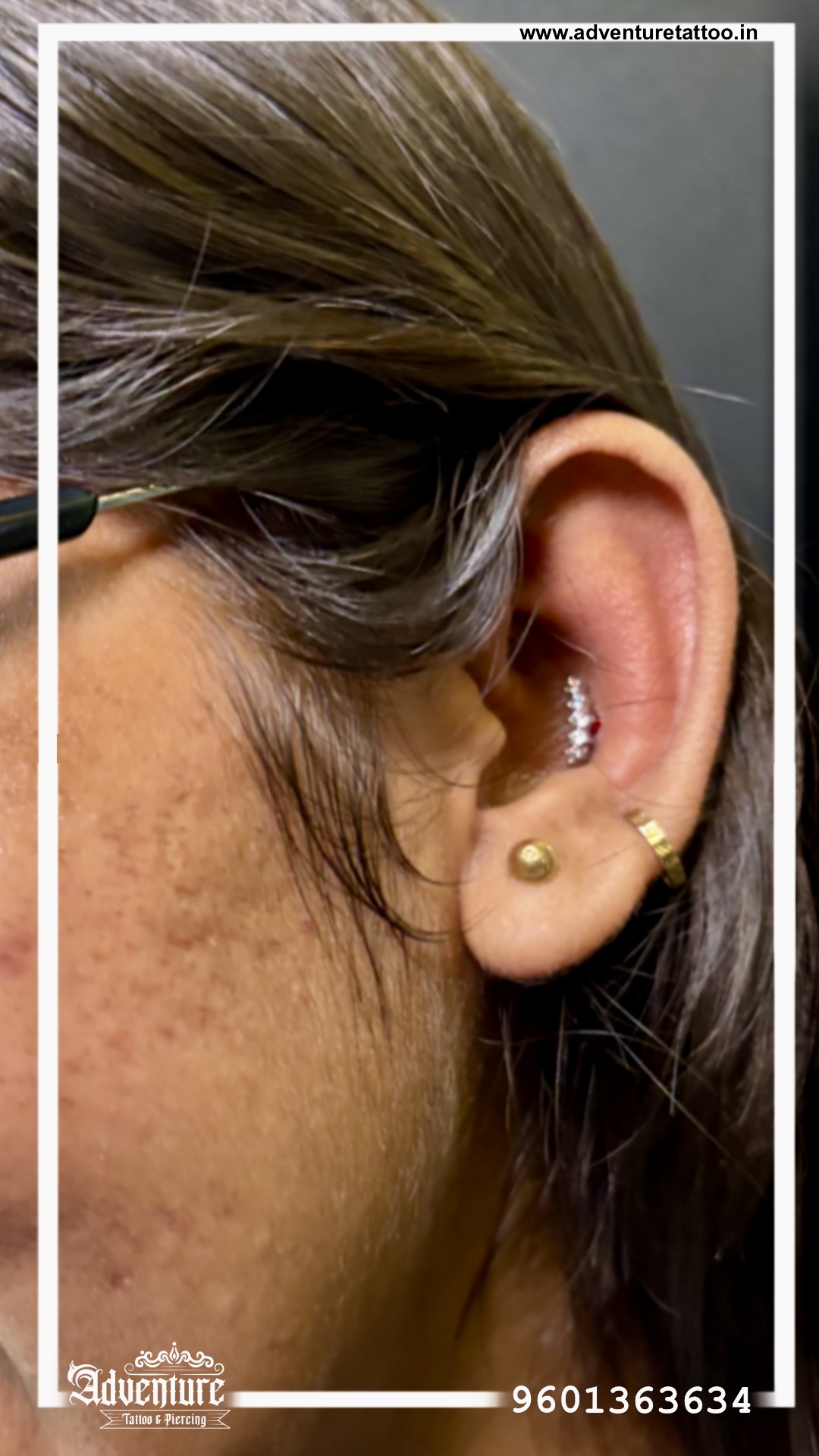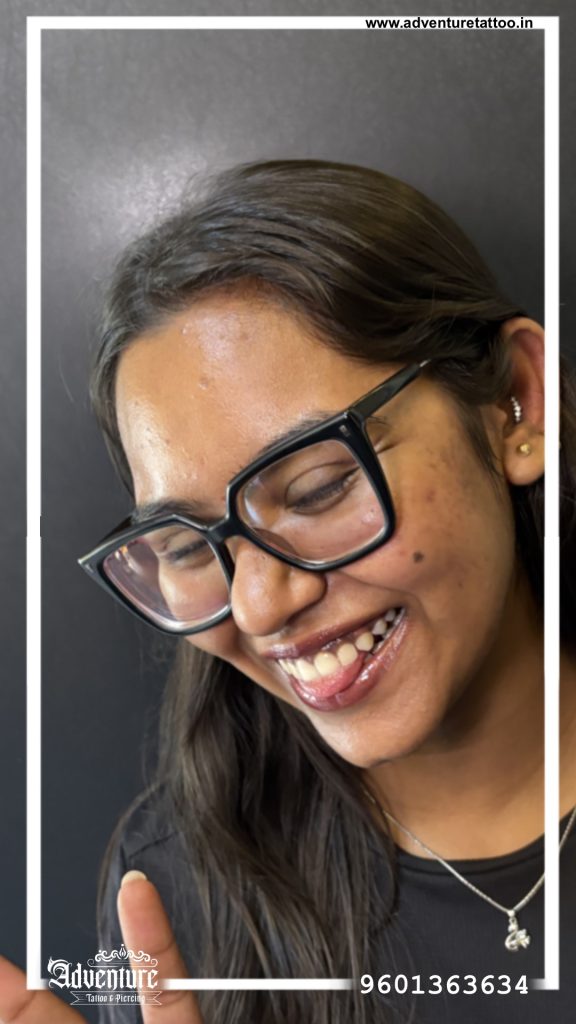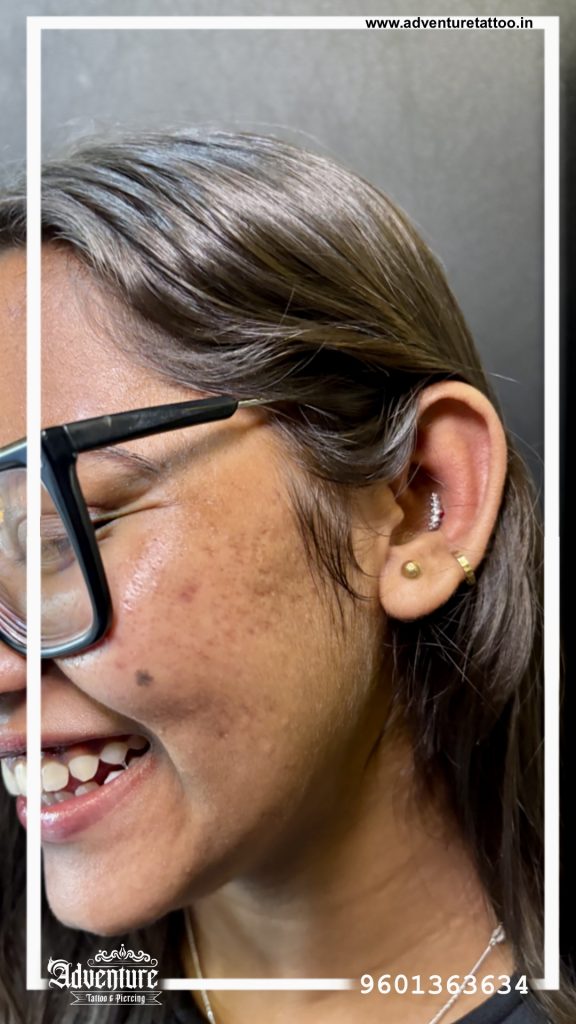
Body jewellery does not always need a traditional entry and exit point to make an impact. A tiny stone placed neatly on the skin can look subtle from a distance and striking up close. That balance is one reason interest in dermal piercing in Ahmedabad continues to grow among people who want a modern, minimal and highly personalised form of body art.
Also called a microdermal, dermal anchor or single-point piercing, this style allows a decorative top to sit almost flush against the skin. It can be used on suitable areas such as the upper chest, collarbone region, cheek, back or other carefully assessed placements. Unlike a standard ear or nose piercing, a dermal piercing has one visible point rather than jewellery passing through two openings.
At Adventure Tattoo & Piercing Studio, every placement begins with a conversation. We consider the client’s preferred look, anatomy, clothing, daily routine and the amount of movement or friction the area experiences. This complete guide explains what a dermal piercing is, how the process works, what to expect during healing, which aftercare habits matter and why professional placement is essential.
Dermal Piercing in Ahmedabad: Quick Overview
- Also known as: microdermal piercing, dermal anchor, surface anchor or single-point piercing.
- Appearance: one small decorative top appears to sit directly on the skin.
- Popular placements: upper chest, collarbone area, cheek, back dimples and selected flat body areas.
- Best suited for: clients who want a minimal but distinctive body-jewellery look.
- Important consideration: placement, anatomy, jewellery choice, friction and aftercare can influence the result.
- Professional support: consultation, sterile setup, careful placement and clear aftercare guidance are essential.
What Is a Dermal Piercing?
A dermal piercing is a type of body piercing in which a small base, often called an anchor, sits beneath the surface of the skin while a decorative top remains visible. The external top may look like a tiny crystal, bead or flat disc. Because the jewellery uses a single opening, the finished result can resemble a small gem resting naturally on the body.
The Association of Professional Piercers describes surface anchors as single-point piercings formed through one opening. The same opening functions as the entrance and exit during placement. The organisation also distinguishes them from more invasive subdermal or transdermal implants. Readers who want a technical professional overview can review the Association of Professional Piercers FAQ on surface anchors.
This single-point structure gives the piercer more creative placement possibilities than many traditional piercings. However, it also makes careful planning especially important. A position that looks beautiful while standing still may experience repeated pressure from clothing, sleep, exercise, bags, seat belts or work equipment. A responsible consultation considers both appearance and lifestyle before the final mark is approved.
How Is a Dermal Piercing Different from a Traditional Piercing?
A conventional piercing usually creates a channel with two visible ends. An earlobe stud, for example, enters through the front and exits at the back. A nostril stud also passes through a channel in the tissue. A dermal anchor has one visible point because its base remains beneath the surface.
That difference affects jewellery, maintenance and removal. The decorative top may sometimes be changed after the piercing is fully settled, but the anchor underneath should not be treated like a normal removable earring. If a client wants to retire the piercing, professional removal is the safer approach. Pulling or attempting to remove the anchor at home can unnecessarily injure the tissue.
A dermal anchor is also different from a surface bar piercing. A surface bar typically has two visible ends connected by jewellery running under the skin, whereas a dermal piercing has a single visible top. The right option depends on the desired design, anatomy and placement. During a consultation for dermal piercing in Ahmedabad, a trained piercer should explain which approach better suits the client’s goal.
Why Are Dermal Piercings So Popular?
Dermal piercings appeal to people who want jewellery in a location where a conventional piercing may not create the same visual effect. A single gem can highlight the collarbone, complement a tattoo, add symmetry to the chest or serve as an intentional beauty mark. The final look can be feminine, bold, understated or dramatic depending on placement and jewellery.
Another reason for their popularity is personalisation. Two clients can choose the same jewellery top and still receive completely different results because body shape, placement and surrounding tattoos change the composition. Some people prefer one minimal anchor, while others are interested in paired or carefully arranged placements. More is not automatically better; every additional piercing needs its own anatomy and lifestyle assessment.
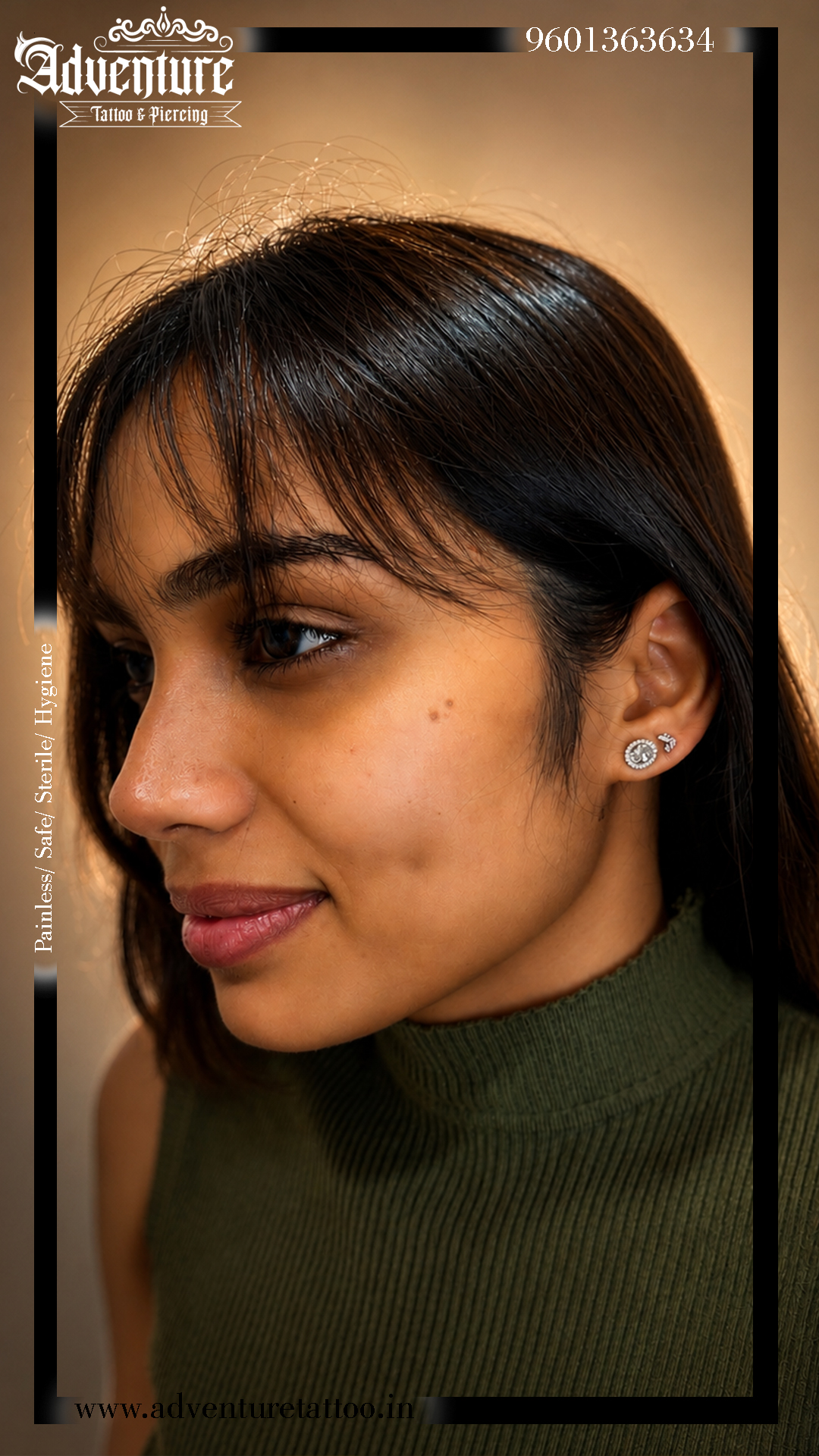
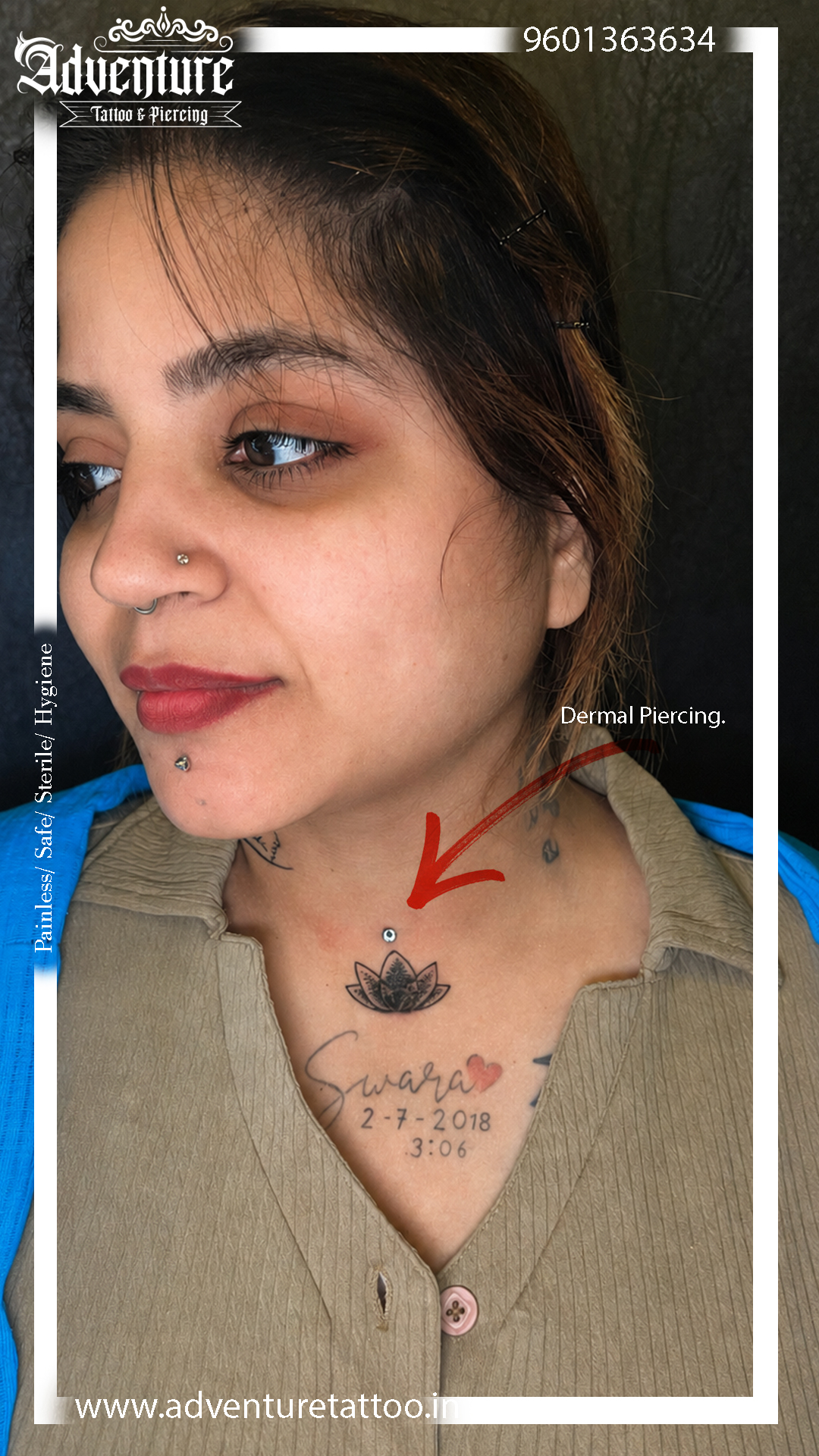
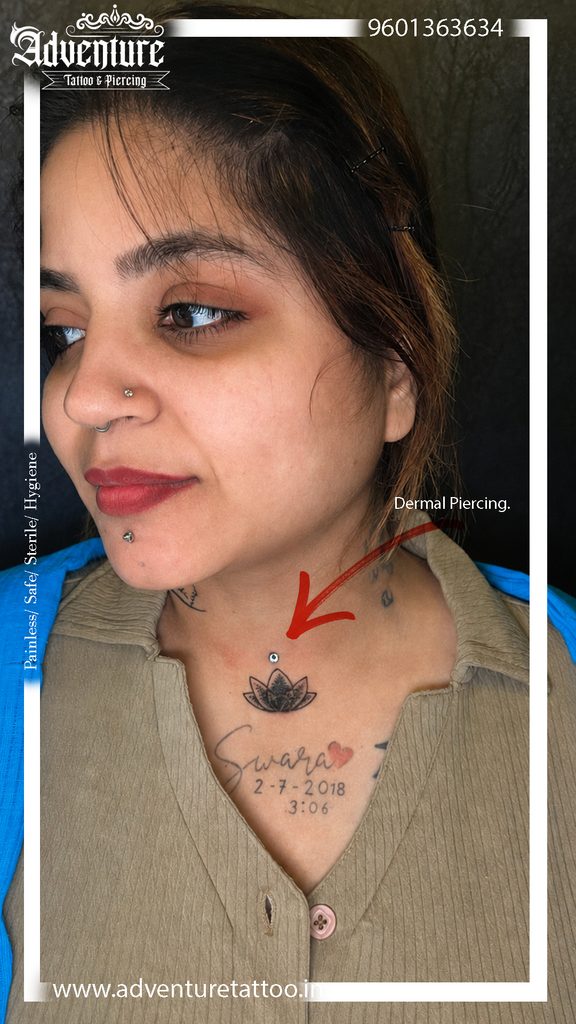
For the client shown in our featured image, the small upper-chest dermal adds a clean point of shine above an existing tattoo. It does not compete with the artwork. Instead, it creates a visual connection between jewellery and body art. This is a strong example of how thoughtful placement can make a very small detail feel intentional.
Popular Placements for Dermal Piercing in Ahmedabad
1. Upper-Chest Dermal Piercing
An upper-chest dermal can create a beautiful central or slightly offset accent. It works especially well for clients who want the jewellery to remain visible with open-neck clothing. Because this area may encounter collars, necklaces, towels and seat belts, placement should account for daily friction.
2. Collarbone Dermal Piercing
The collarbone region offers a refined, jewellery-like appearance. A single anchor can look delicate, while paired placements can create symmetry. Not every point around the collarbone is equally suitable, so the piercer must assess skin movement and the way clothing rests on the area.
3. Cheek or Facial Dermal
A facial dermal can resemble a permanent beauty gem and produces a noticeably bolder look. Facial placements require careful consideration of anatomy, visibility, work environment, skincare, makeup and the risk of accidental snagging. Clients should also understand that any piercing can leave a mark after removal.
4. Back-Dimple Dermals
Back-dimple placements are chosen for their symmetry and decorative effect. The area can face pressure from waistbands, tight clothing, sitting, sleeping and exercise. Anyone considering this option should discuss lifestyle, healing responsibilities and long-term maintenance before deciding.
5. Dermal Piercing Near a Tattoo
A small jewellery top can become part of a larger artistic composition. It may highlight a star, flower centre, eye, ornament or geometric point within a tattoo. Timing and placement matter because a fresh tattoo and a fresh piercing each need their own healing plan. The piercer and tattoo artist should avoid compromising the existing artwork or creating unnecessary irritation.
These examples are inspiration, not a promise that every placement will suit every person. Anatomy, movement, skin condition and lifestyle determine whether a proposed area is appropriate. The best dermal piercing in Ahmedabad is not simply the trendiest placement; it is the placement that looks good and makes sense for the individual client.
Who Is a Good Candidate for Dermal Piercing in Ahmedabad?
A good candidate understands that a surface anchor needs ongoing attention and may not be permanent. They are willing to follow aftercare guidance, avoid unnecessary touching and protect the site from pressure and snagging. They also choose a placement based on professional assessment rather than forcing a design onto unsuitable anatomy.
During consultation, tell the piercer about relevant allergies, skin sensitivities, a history of difficult scarring or keloids, medications, health conditions and any current irritation near the proposed site. A professional piercer does not replace a doctor. If a health condition may affect healing, medical guidance may be appropriate before proceeding.
Clients with active rashes, cuts, sunburn, unexplained swelling or infection around the intended area should postpone the piercing and seek appropriate care. It is also sensible to delay a dermal piercing immediately before a holiday, swimming plan, intense sporting event or occasion where tight clothing will repeatedly press against the site.
What Happens During a Dermal Piercing in Ahmedabad Appointment?
The exact technique should be selected and performed only by a trained professional. A typical appointment includes the following stages:
- Consultation: The piercer discusses the desired look, suitable placement, jewellery, maintenance and possible risks.
- Anatomy and lifestyle assessment: The skin, movement of the area and likely friction points are evaluated.
- Marking: The proposed position is marked so the client can check alignment in a natural standing or sitting posture.
- Preparation: The work area, skin and sterile supplies are prepared according to professional hygiene procedures.
- Placement: A small opening is created and the anchor is positioned beneath the surface by the piercer.
- Final check: The external top should sit neatly and the site is checked before the client leaves.
- Aftercare briefing: The client receives instructions on cleaning, protection, warning signs and follow-up.
This description is educational, not a do-it-yourself tutorial. Dermal piercing requires sterile equipment, anatomy knowledge and professional technique. Attempting it at home can increase the risk of incorrect placement, excessive tissue damage, contamination and complications.
Does Dermal Piercing in Ahmedabad Hurt?
Pain is personal. The sensation can vary according to placement, anatomy, stress, sleep, individual pain tolerance and the professional’s technique. Many clients describe the procedure as quick, with pressure or a sharp moment rather than prolonged discomfort. However, no responsible studio should promise a completely painless experience because every person responds differently.
Feeling calm and informed can make the appointment easier. Eat a proper meal beforehand, stay hydrated, avoid arriving under the influence of alcohol or drugs and tell the piercer if you feel anxious or faint. A professional team should explain each stage without rushing you and allow you to approve the mark before the procedure begins.
Dermal Piercing in Ahmedabad Jewellery: What Is Under the Skin?
Dermal jewellery generally includes a base positioned beneath the skin and an external decorative top. The visible top can be minimal and flat or more decorative, depending on the placement and what is appropriate for healing. The shape, material, profile and fit all matter. Jewellery that sits too high or catches repeatedly may be more vulnerable to irritation and trauma.
Do not select initial jewellery only because it is the largest or most sparkling option. A professional recommendation considers anatomy, skin movement and healing needs. Once the piercing is genuinely settled, ask the piercer whether the top can be changed. Trying to unscrew a top too early may disturb the anchor.
If you want to explore other services before booking, visit our piercing services page. You can also review general service information and enquire about jewellery options directly with the studio.
Dermal Piercing in Ahmedabad Healing: What to Expect
Healing is not identical for every client. Placement, movement, aftercare, general health, friction and accidental knocks can all affect the journey. Early tenderness, localised swelling, mild bruising or a small amount of pale fluid that dries into light crust may occur with a fresh piercing. The area can look calm on the outside before the tissue underneath is fully settled.
The most useful approach is to follow the personalised instructions supplied by your piercer and attend a follow-up if anything seems unusual. Do not rush to change the decorative top simply because the area looks better after a short time. A surface anchor needs stability while the surrounding tissue settles.
The Association of Professional Piercers describes surface anchors as “long-term temporary.” In practical terms, they are not guaranteed to remain forever. The body may eventually push an anchor toward the surface, and jewellery in areas with frequent movement, pressure or snagging may have a shorter lifespan. Understanding this before the appointment helps clients make a realistic decision.
Dermal Piercing in Ahmedabad Aftercare: Essential Guidance
Aftercare should be simple, consistent and based on the instructions given for your exact placement. The Association of Professional Piercers aftercare guidance recommends washing hands before touching a piercing, using a sterile saline wound wash during healing, gently drying with clean disposable material and avoiding unnecessary rotation of jewellery.
What to Do
- Wash your hands thoroughly before cleaning or touching near the piercing.
- Use the sterile saline product and cleaning routine recommended by your professional piercer.
- Dry gently with clean disposable gauze or another recommended disposable material.
- Keep clothing, bedding and items that contact the area clean.
- Protect the jewellery from accidental snagging while dressing, sleeping, exercising or drying with a towel.
- Check in with your piercer if the top appears loose, raised, tilted or repeatedly irritated.
- Follow placement-specific advice for bathing, exercise, makeup and clothing.
What to Avoid
- Do not twist, spin, play with or repeatedly press the jewellery.
- Do not use alcohol, hydrogen peroxide, harsh antibacterial products or unapproved ointments on the site.
- Do not apply makeup, perfume, lotion or body products directly around a healing surface anchor.
- Avoid tight clothing, straps or accessories that rub over the jewellery.
- Avoid swimming pools, hot tubs, lakes and other submersion while the piercing is healing unless your professional gives appropriate protective guidance.
- Do not pick crust or use aggressive cleaning to make the area look perfectly clear.
- Do not attempt to change or remove the anchor at home.
Over-cleaning can irritate the area just as neglect can. More product does not automatically mean better healing. Use the method recommended for your piercing, remain consistent and ask before adding home remedies or strong skincare products.
Common Aftercare Mistakes
Touching the Jewellery to “Check” It
Frequent checking introduces movement and may transfer contamination from the hands. A dermal top does not need to be pushed or rotated during ordinary care. Observe it without constantly manipulating it.
Ignoring Clothing Friction
An upper-chest dermal may catch on collars, necklaces, bra straps, towels or seat belts. A back placement may face pressure from waistbands and sitting. Small repeated friction can be more troublesome than one obvious event, so plan clothing around the site during healing.
Changing the Top Too Early
The external part may look ready while the tissue around the base remains fragile. Early jewellery changes can disturb the position of the anchor. Ask the original piercer to assess the site before making a change.
Using Strong Products
Alcohol, peroxide and harsh cleansers can irritate healing tissue. Homemade mixtures may also be inconsistent. Use a suitable sterile saline wound wash when recommended and follow professional instructions.
Trying to Fix a Problem Alone
Online photographs cannot reliably diagnose every bump, irritation or infection. If pain, redness, swelling or discharge is worsening, contact a qualified piercer and seek medical care when infection is suspected. Early attention is better than waiting for a serious problem.
Migration and Rejection: What Do These Terms Mean?
Migration means the jewellery is gradually moving from its original position. Rejection means the body is pushing the anchor toward the surface. Possible warning signs include a top that no longer sits flush, a visible change in angle, thinning skin over the anchor, increasing visibility of the base or a growing track of redness.
These changes do not always mean the client did something wrong. Surface anchors are long-term temporary piercings, and the body may eventually reject them even with thoughtful placement and consistent care. Friction, trauma and an unsuitable placement can increase problems, which is why the initial assessment matters.
Do not pull out a migrating anchor. Contact a professional piercer promptly. Timely retirement may reduce additional tissue damage and scarring compared with allowing jewellery to tear through the surface.
What Is Normal and What May Need Medical Attention?
A fresh piercing can be tender, mildly swollen or slightly discoloured. Small amounts of pale fluid that dry into crust can occur during healing. Symptoms should generally move in a calmer direction rather than becoming progressively more severe.
Seek prompt medical advice if the area becomes increasingly hot, very painful, markedly swollen, intensely red or dark, produces pus, or if you feel feverish, shivery or generally unwell. The NHS guidance on infected piercings advises getting medical help quickly when infection is suspected. Do not remove jewellery because of a suspected infection unless a medical professional tells you to do so.
A professional piercer can help identify mechanical irritation, pressure or jewellery concerns, but infection is a medical matter. When in doubt, prioritise health over appearance and consult an appropriate healthcare professional.
Can Dermal Piercing in Ahmedabad Be Removed?
Yes, a dermal anchor can be retired, but removal should be handled by a professional. The base sits beneath the skin and cannot be taken out like a normal stud. A piercer assesses how it is positioned and selects an appropriate removal method designed to minimise unnecessary trauma.
Some mark or scar may remain after any piercing is removed. The final appearance varies with placement, how long the anchor was present, whether migration occurred, individual healing and the way the site was retired. Anyone prone to raised or problematic scars should discuss that history before being pierced.
What Is the Price of Dermal Piercing in Ahmedabad?
The price of a dermal piercing in Ahmedabad can vary according to jewellery material, decorative top, placement, complexity and whether the client chooses a single or paired arrangement. A low advertised price should never be the only deciding factor. Professional assessment, sterile single-use supplies, appropriate jewellery and aftercare support all form part of a responsible service.
Adventure Tattoo & Piercing Studio provides pricing based on the selected setup and jewellery. For the latest information, see our tattoo and piercing pricing page or contact the studio with a clear photo of the area and your preferred placement. Final suitability and cost are confirmed after consultation.
Why Choose Adventure Tattoo & Piercing Studio?
Adventure Tattoo & Piercing Studio has served Ahmedabad since 2014. Our approach combines creative placement with a strong focus on hygiene, communication and client comfort. A dermal piercing may be tiny, but the decisions behind it deserve the same attention as a larger body-art project.
- Personal consultation: We discuss placement, look, lifestyle and maintenance before beginning.
- Careful marking: Clients see and approve the proposed position before the procedure.
- Hygiene-focused process: The procedure is performed in a controlled studio setup using appropriate sterile supplies.
- Jewellery guidance: We help clients choose a suitable initial option rather than selecting only by appearance.
- Aftercare support: Clients receive clear care guidance and can contact the studio with follow-up concerns.
- Experienced body-art team: Tattoo and piercing knowledge helps when integrating a dermal placement with existing body art.
Explore our main Adventure Tattoo & Piercing Studio website to see our services, gallery and contact options.
How to Prepare for a Dermal Piercing in Ahmedabad Appointment
A little preparation can make the experience smoother. Eat a proper meal, drink water and arrive in clean, comfortable clothing that gives the piercer easy access to the selected area. Avoid clothing that will press directly over the fresh jewellery when you leave.
Bring a valid identification document if requested and share relevant health information honestly. Do not arrive under the influence of alcohol or recreational drugs. If you are unwell, have active skin irritation or recently injured the area, rescheduling may be the more responsible choice.
Save reference images, but remain open to professional adjustments. The exact point that looks ideal in a photograph of someone else may not suit your anatomy. A small shift can improve alignment, reduce friction or create a more balanced result.
Frequently Asked Questions About Dermal Piercing in Ahmedabad
1. Is a dermal piercing the same as a microdermal?
Yes. Dermal piercing, microdermal, dermal anchor, surface anchor and single-point piercing are commonly used names for this style. Terminology can vary between clients and studios.
2. Is a dermal piercing permanent?
No dermal anchor should be promised as permanent. Professional guidance describes surface anchors as long-term temporary. Some last longer than others, but migration or rejection can occur over time.
3. Which placement is best?
The best placement depends on anatomy, skin movement, clothing, work, exercise and the desired look. Upper-chest and collarbone placements are visually popular, but an in-person assessment is important.
4. Can I get a dermal piercing above a tattoo?
It may be possible when the skin is fully healed and the placement is suitable. The jewellery can become part of the tattoo composition. The piercer should assess the exact area and avoid compromising the artwork or skin.
5. How painful is a chest dermal piercing?
The sensation differs for every person. Many clients find the procedure quick, but discomfort depends on placement, anatomy, stress and pain tolerance. We avoid making an absolute painless promise.
6. How long does healing take?
Healing varies by person and placement. The outside may appear calm before the tissue underneath is fully settled. Follow the aftercare plan and ask your piercer before changing the top or treating the piercing as fully healed.
7. Can I shower after a dermal piercing?
Your piercer will provide placement-specific instructions. In general, gentle shower rinsing is preferable to soaking, and the site should be dried carefully with a clean disposable material. Avoid rubbing it with a towel.
8. Can I swim with a fresh dermal piercing?
Submerging a healing piercing in pools, lakes, oceans or hot tubs can expose it to contaminants. Avoid swimming during the healing period unless your professional provides suitable protective guidance.
9. Can I apply makeup over a dermal piercing?
Makeup and personal-care products can collect around the top and irritate the site. Professional aftercare guidance advises keeping cosmetics away from surface anchors, including after healing.
10. Can the decorative top be changed?
The external top may be changeable, but only after the anchor is stable and a professional confirms the piercing is ready. Early or forceful changes can disturb the base.
11. What should I do if the jewellery catches on clothing?
Do not pull or repeatedly push it back into place. Keep the area clean, avoid further pressure and contact your piercer, especially if the angle, height, pain or skin appearance changes.
12. What if I no longer want the piercing?
Book professional removal. A dermal anchor should not be pulled out at home. Continue appropriate care while the small opening closes and seek advice if healing is unusual.
13. Will a dermal piercing leave a scar?
Any piercing can leave a mark. The final appearance depends on individual healing, placement, trauma, migration and removal. Discuss any history of raised or difficult scarring before proceeding.
14. How do I know if my dermal is rejecting?
Possible signs include thinning skin, a change in angle, the top sitting increasingly high, visible movement or more of the base showing. Contact a professional early rather than waiting for the jewellery to tear through the surface.
15. When should I see a doctor?
Seek medical advice if symptoms are severe or worsening, the area is hot and very painful, there is pus, redness is spreading, or you feel feverish or generally unwell. A piercer cannot diagnose or treat a medical infection.
16. Do I need an appointment?
Contacting the studio in advance is recommended for a dermal piercing because consultation, placement and jewellery options need careful attention. Availability may vary, especially during busy hours.
Book Your Dermal Piercing in Ahmedabad
A dermal piercing proves that a small detail can completely change a look. Whether you want a single upper-chest gem, a collarbone accent or a carefully positioned addition to an existing tattoo, thoughtful placement is the foundation of a beautiful result.
Visit Adventure Tattoo & Piercing Studio for a professional consultation about dermal piercing in Ahmedabad. Our team will help you understand placement, jewellery, maintenance and aftercare before you decide.
Adventure Tattoo & Piercing Studio
Vastrapur, Ahmedabad
Call or WhatsApp: 9601363634
Website: www.adventuretattoo.in
Instagram: @adventure_tattoo_ahmedabad
Ready for a minimal detail with maximum impact? Contact us today to discuss your dermal piercing idea and book a professional placement consultation.
Dermal Piercing in Ahmedabad is becoming popular among people who want a stylish, subtle and unique body piercing.
For safe and professional Dermal Piercing in Ahmedabad, always choose an experienced piercer who follows proper hygiene and sterilization standards.