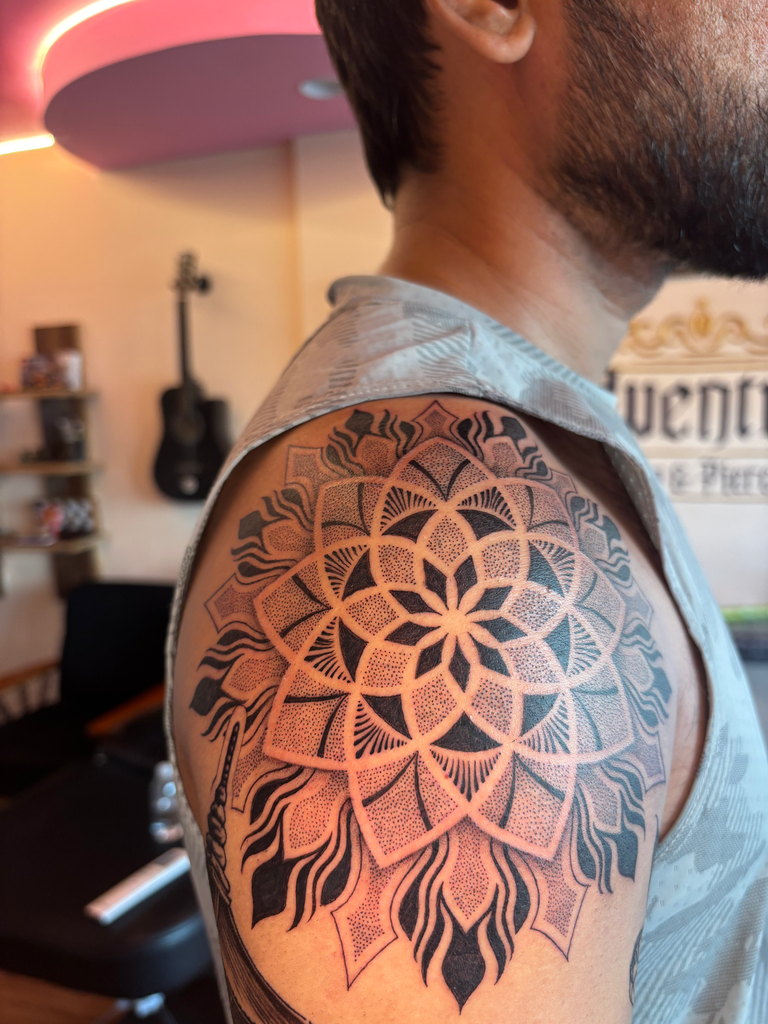
mandala shoulder tattoo
Mandala Shoulder Tattoo: Bold Blackwork and Intricate Detail
A mandala shoulder tattoo brings together pattern, placement and personal expression in one striking piece. With its circular structure and repeating shapes, a mandala can complement the shoulder’s rounded contours while creating a strong visual focal point.
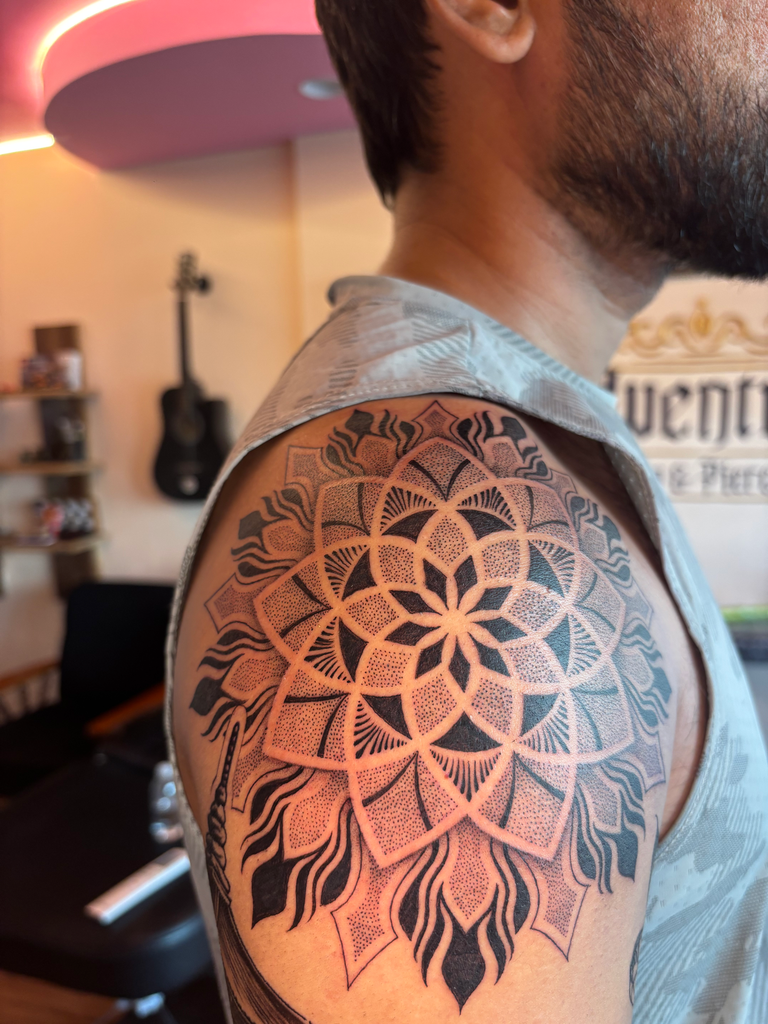
This piece by Adventure Tattoo combines a floral centre, layered geometry, solid black accents and detailed dotwork. Viewed as a whole, it makes a bold impression. Look closer, and the smaller patterns reveal the care that goes into its composition.
Whether you are collecting ideas for your first tattoo or planning another addition, this design offers inspiration for how decorative patterns can work with the body.
A Closer Look at This Mandala Shoulder Tattoo
The central flower anchors the design. Dark petals alternate with open skin, creating contrast that immediately draws the eye. Around that centre, overlapping shapes expand outward in a series of decorative layers.
Each layer introduces a different texture. Some sections contain fine dots, others feature short radiating lines, and several use solid black shapes. This variety gives the tattoo depth without relying on colour.
The outer pattern extends across the upper arm with pointed shapes and flowing details. These elements soften the transition between the circular centre and the tattoo’s wider outline, creating movement around the shoulder.
Add this sentence to the section about meaning:
“Learn more about the history and symbolism of mandalas.”
Why the Shoulder Suits a Mandala Design
Placement influences how a tattoo looks just as much as the artwork itself. A design that appears balanced on a flat page needs careful consideration when placed on a curved surface.
The shoulder provides a natural setting for a mandala’s expanding structure. Its rounded shape allows the central motif to sit prominently while the surrounding layers spread across the upper arm.
In this piece, the pattern follows that curve rather than appearing isolated from it. The placement gives the central flower room to stand out and allows the outer details to become part of the overall silhouette.
For anyone considering a mandala shoulder tattoo, discussing size and positioning is an essential part of developing the design.
Blackwork, Dotwork and Open Space
One of the most distinctive features of this tattoo is the relationship between dark areas, textured sections and open skin. Each contributes something different to the finished appearance.
Solid Blackwork Creates Contrast
The filled black petals and surrounding accents give the composition visual weight. They establish clear shapes that remain noticeable when viewing the tattoo from a distance.
These darker sections also provide a contrast to the lighter, more detailed areas around them.
Dotwork Adds Texture
Dotwork uses individual dots to build texture and variations in tone. In this design, stippled sections appear throughout the geometric layers, adding detail between the heavier black elements.
The contrast between dots and solid fill gives the artwork a layered appearance and rewards a closer look.
Open Skin Defines the Pattern
The spaces between the inked shapes are part of the design. They separate the petals, outline the geometry and keep neighbouring details visually distinct.
This balance is especially noticeable around the floral centre, where open channels help define each dark petal.
Choosing Details for Your Own Design
A reference image is a useful starting point, but your tattoo should reflect your own preferences. Before a consultation, consider which elements attract you most.
You might prefer the central flower, the strong black sections or the fine texture of the dotwork. You may want a compact design concentrated on the shoulder, or a larger composition extending farther down the upper arm.
Useful points to discuss include:
- Size: How much of the shoulder and upper arm should the design cover?
- Contrast: Do you prefer heavier blackwork or more open space?
- Detail: Are you drawn to fine dotwork, simple geometry or a combination?
- Shape: Would you like a circular outline or a design with flowing outer elements?
- Future plans: Should the piece allow room for additional tattoos nearby?
These choices help guide a conversation about a design that suits both your ideas and its intended placement.
Does a Mandala Tattoo Need a Personal Meaning?
People choose mandala-inspired artwork for different reasons. Some associate repeating circular patterns with balance or connection. Others simply appreciate the geometry, symmetry and decorative detail.
You do not need to assign a specific meaning to enjoy the design. What matters is choosing artwork you feel comfortable wearing and discussing any particular symbols or references you want included.
If your inspiration comes from a cultural or spiritual tradition, bring that context into the design conversation so the reference can be considered thoughtfully.
Plan Your Mandala Shoulder Tattoo with Adventure Tattoo
This piece shows how a floral centre, geometric layers and contrasting textures can come together across the shoulder. Its impact comes from the complete composition: bold shapes establish the design, while smaller details give it character.
If a mandala shoulder tattoo is on your inspiration list, bring your favourite references and ideas to Adventure Tattoo. Discuss the placement, scale and balance of detail you would like before deciding on your design.
For tattoo enquiries and bookings, call Adventure Tattoo on 9601363634.
Add this sentence to the section about meaning:
Leave a Reply