Striking
Striking Lotus Sleeve Tattoo: Japanese Monastery Design
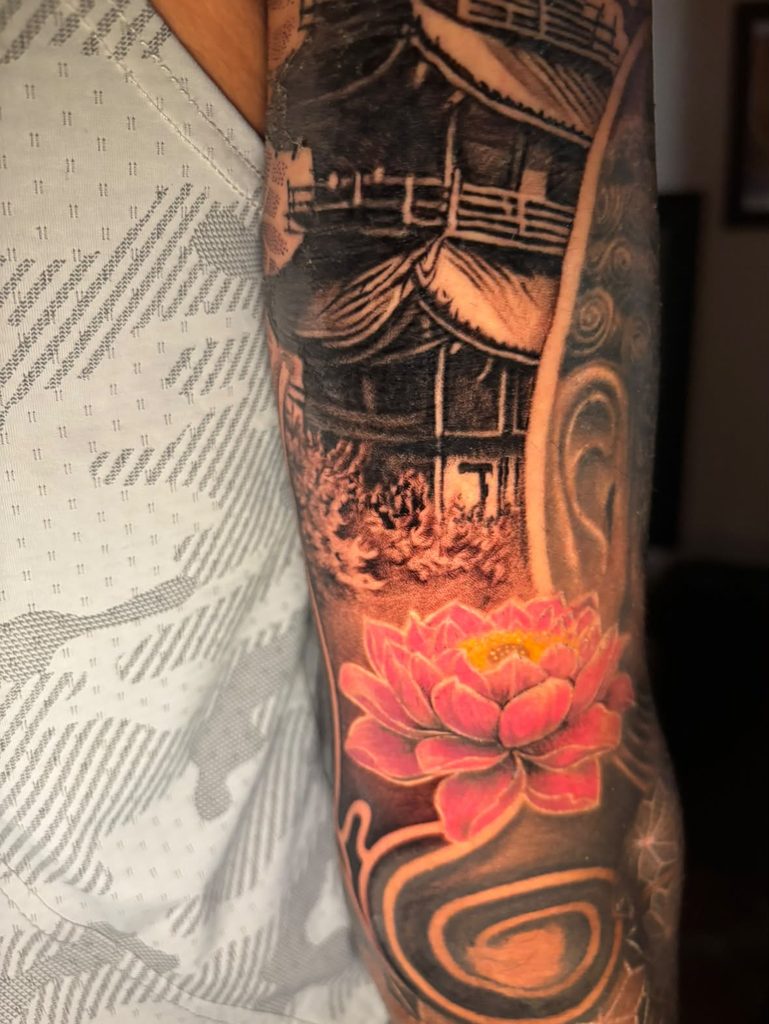
A vivid pink lotus sits beneath the layered rooftops of a Japanese monastery in this full sleeve tattoo in progress. Combining colour realism with black and grey architectural detail, the design brings together two distinct visual elements within a developing composition.
This lotus sleeve tattoo is still taking shape. The photograph captures the contrast already emerging between the bright flower, shadowed buildings, and flowing patterns around the arm.
A Pink Lotus Brought to Life Through Colour Realism
The lotus immediately draws attention through its saturated pink petals and warm yellow centre. Changes in tone across the petals create depth, while lighter edges help separate their overlapping forms.
These details give the flower a dimensional appearance. Some petals turn outward, while others gather around the centre, creating a layered structure that makes the bloom feel full.
Colour also plays an important role in the wider design. Against the darker surrounding work, the lotus becomes a clear focal point. The contrast allows its shape to remain readable while rewarding a closer look at the shading within each petal.
Japanese Monastery Architecture in Black and Grey
Above the flower, Japanese monastery architecture adds structure and intricate detail. Tiered rooftops, railings, and shaded openings guide the eye upward through the visible section of the sleeve.
The architectural work uses dark areas and exposed skin to distinguish the building’s features. Curved rooflines contrast with straighter supports and railings, giving the composition a varied rhythm.
In this lotus sleeve tattoo, the monastery provides a detailed setting for the flower. Its darker tones give the pink petals room to stand out, while the rooftops create another point of interest higher on the arm.
Bringing the Sleeve Together Around the Arm
A full sleeve is viewed from multiple angles, so the relationship between its elements matters as much as each individual detail. The placement of the flower beneath the architecture creates a visible connection between the upper and lower sections shown in the photograph.
Surrounding shading and curved patterns help carry the eye through the design. These connecting areas contribute to the overall flow and give the main subjects space within the composition.
The combination of organic petals and architectural forms is particularly striking. Each brings a different shape and texture, giving the sleeve variety as it develops.
A Work in Progress With More to Come
This photograph records a stage in an ongoing full sleeve project. It shows the colour realism lotus and monastery imagery already established, while the overall piece remains unfinished.
Progress photographs offer a useful way to appreciate a sleeve as it develops across sessions. They capture the smaller details as well as the relationship between colour, shading, and placement.
For anyone gathering inspiration for a lotus sleeve tattoo, this piece demonstrates how a vivid floral subject can work alongside detailed architectural imagery. The finished sleeve is still to come, with this view offering a close look at the composition taking shape.
Interested in a custom full sleeve tattoo? Get in touch to discuss your ideas, preferred imagery, and the direction you would like your design to take.
Striking Lotus Sleeve Tattoo with Japanese Monastery Details
A full sleeve tattoo develops gradually, with each section contributing to a larger composition. This ongoing piece brings together a vibrant pink lotus in colour realism and detailed Japanese monastery architecture. The contrast between the flower and its darker surroundings gives the visible design a strong focal point.
This lotus sleeve tattoo combines soft, organic shapes with the structure of layered rooftops, railings, and architectural shadows. Flowing patterns around the main subjects add movement through the visible section of the arm.
The sleeve is still in progress, and this photograph captures one stage of its development. It offers a closer look at the colour, shading, and placement that are bringing the composition together.
A Pink Lotus at the Heart of the Design
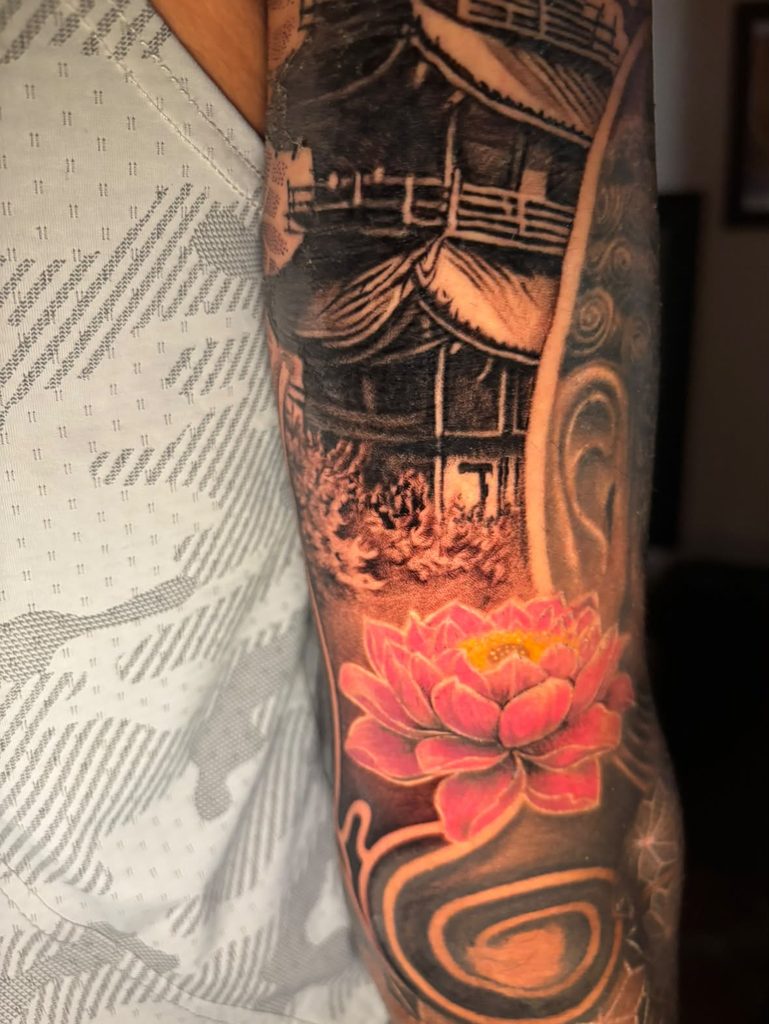
The pink lotus is the most colourful element in the photographed section. Its layered petals open around a warm yellow centre, creating a bloom that stands out against the black and grey work above and around it.
The flower’s shape comes from more than its outline. Shifts between lighter pink, deeper red tones, and shaded folds help distinguish one petal from another. Highlights along selected edges bring definition to the overlapping forms.
The outer petals extend away from the centre, while the inner petals sit more closely together. This variation gives the lotus depth and helps create the rounded appearance associated with realism.
Its placement also matters. Positioned beneath the monastery, the flower draws the eye toward the lower part of the visible composition before the architectural details lead it upward.
How Colour Realism Gives the Lotus Dimension
Colour realism relies on the relationship between light, shadow, shape, and tone. In this piece, those elements help the lotus appear dimensional against the surrounding design.
The deeper shading near the bases of the petals suggests folds and overlap. Brighter areas bring selected surfaces forward, helping the flower retain a clear structure despite its many individual petals.
The warm centre adds another point of contrast within the pink bloom. It creates a small area of concentrated detail that draws attention inward before the eye moves outward across the petals.
In a lotus sleeve tattoo, these details can make the flower both a recognisable subject from a distance and an interesting element to examine closely. Here, its bold colour establishes its presence, while the shading provides the finer detail.
Japanese Monastery Architecture Above the Flower
Above the lotus, the Japanese monastery introduces a different visual language. Its stacked rooftops, horizontal railings, and vertical supports create an arrangement of repeating lines and shapes.
The roof edges are particularly prominent. Their curved forms give the building a distinctive silhouette, while the darker areas beneath them suggest depth and separation between levels.
Railings and structural supports add smaller details within the larger architectural shapes. These features encourage a closer look and give the building a sense of scale within the tattoo.
The monastery extends beyond the top of the photographed section, suggesting how this visible area belongs to a larger sleeve composition. The image provides a close view of its details without showing the entire project.
The Contrast Between Bright Colour and Black and Grey
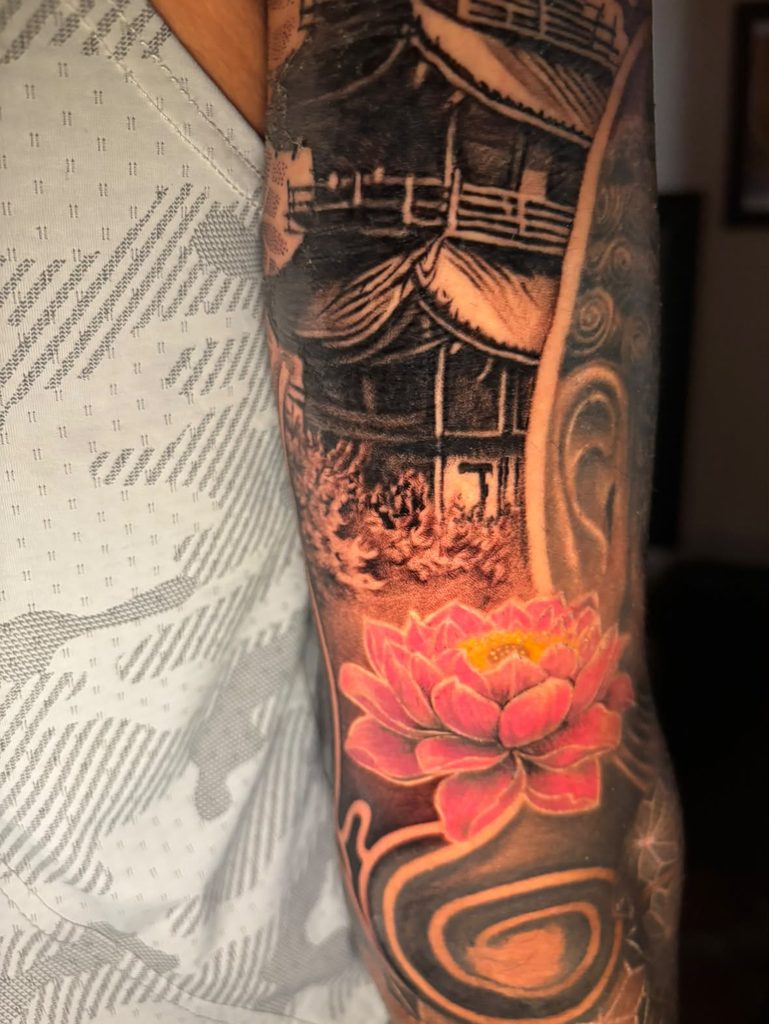
One of the clearest features of this design is the contrast between the vivid lotus and the darker architecture.
The flower uses colour to establish its presence. The monastery relies more heavily on tonal differences, with dark shading, softer grey areas, and lighter spaces defining its structure.
These approaches give each subject a distinct character while allowing them to share the same composition. The pink petals catch the eye first, and the architectural details provide additional areas to explore.
The surrounding darker work also gives the flower a clear backdrop. This helps the edges of the petals remain visible and strengthens the overall shape of the bloom.
For anyone considering a lotus sleeve tattoo, this piece offers an example of how selective colour can create emphasis within a design that also contains substantial black and grey work.
Organic Petals and Architectural Structure
The relationship between the two main subjects extends beyond colour.
The lotus is built from curved, overlapping petals. Its forms are irregular and varied, with different edges turning toward or away from the viewer. The monastery introduces more ordered repetition through its levels, railings, and supports.
This variation gives the composition visual interest. The flower brings rounded forms and concentrated colour, while the building adds structure and a different kind of detail.
There are connections between the subjects, too. The curved rooflines echo some of the movement in the petals, helping the architectural and floral elements feel related within the larger design.
These visual relationships are part of what makes a detailed sleeve rewarding to examine. The main subjects are
Use this authoritative educational source for a paragraph about lotus symbolism:
Outbound link: Lotus symbolism in Buddhism — Government of Manitoba educational
For a real-world example of traditional Japanese temple architecture, explore Kiyomizu-dera Temple in Kyoto.
Leave a Reply